

The Evolution of Luxury Apartments in Abu Dhabi
Social Architecture as the Foundation of Great Residential Communities
Architecture does more than shape skylines – it shapes how people relate to the places they live in and to one another. In contemporary residential design, the idea of belonging has become as important as aesthetics, materials, or scale.
This shift is visible in projects such as Brabus Island in Abu Dhabi, global waterfront residential developments like Shoma Bay in Miami, and the broader evolution of luxury apartments in Abu Dhabi. Across these contexts, architecture is increasingly understood not only as the design of private homes, but as the careful shaping of shared environments that support community, familiarity, and everyday interaction.
The social dimension of architecture – how layouts, circulation, and shared spaces influence connection, privacy, and trust – has become a defining factor in the long-term success of residential developments worldwide.
What Is Social Architecture?
Social architecture refers to the intentional design of built environments that influence how people interact, coexist, and feel connected within a community. Rather than focusing solely on individual units, it considers the relationship between private spaces and shared ones.
Effective social architecture supports:
- Informal, low-pressure interaction
- A sense of safety and predictability
- Community identity without uniformity
- Emotional comfort alongside privacy
Importantly, good social architecture does not force social behaviour. Instead, it creates conditions where interaction can happen naturally, allowing residents to participate at their own pace.
Why Belonging Has Become Central to Modern Living
Urban living today is defined by density, speed, and constant stimulation. While cities offer access and opportunity, they can also fragment social connection. As a result, people increasingly look for homes that offer more than efficiency – they seek environments that feel grounded and socially coherent.
This is why residential developments are now evaluated not only by location or finishes, but by how they feel to live in. Buyers assessing luxury apartments in Abu Dhabi, for example, often consider:
- The quality and usability of shared spaces
- The presence of everyday social touchpoints
- The balance between visibility and privacy
- The overall sense of neighbourhood
Belonging in architecture is built through repetition and familiarity – seeing the same faces, navigating the same paths, and feeling comfortable within shared environments.
Brabus Island, Abu Dhabi: Community Through Identity and Clarity
Brabus Island, developed by Cosmo Developments, represents a design-led approach to residential planning in Abu Dhabi. Positioned as a luxury waterfront island development, it emphasises architectural clarity, controlled scale, and a strong sense of identity.
Rather than relying on size or density, the project’s planning approach focuses on coherence – aligning architecture, landscape, and shared spaces to create a recognisable environment that residents can identify with.
How Brabus Island Supports Belonging
A cohesive architectural language
Consistency in form, material expression, and spatial rhythm helps create a shared visual identity. This reinforces a sense of collective belonging without imposing uniformity.
Shared spaces shaped by lifestyle
Common areas are conceived as extensions of everyday life rather than formal gathering zones. This encourages organic interaction while respecting individual routines.
Waterfront orientation as a shared reference
Waterfront settings often function as neutral, shared environments. Open views, promenades, and outdoor edges encourage slower movement and informal encounters.
Privacy as part of community design
Belonging is not dependent on constant interaction. Spatial planning that respects privacy while maintaining visual connection allows residents to feel secure and socially comfortable.
Shoma Bay: A Global Reference for Community-Led Residential Design
Shoma Bay, located in North Bay Village, Miami, is frequently referenced in architectural discourse as an example of contemporary waterfront residential design. While geographically and culturally distinct from Abu Dhabi, it provides useful insight into how social architecture operates in dense urban contexts.
Its relevance lies not in direct comparison, but in shared design principles.
Social Design Characteristics Observed at Shoma Bay
- Integration of shared amenities into daily routines, rather than isolating them as standalone features
- Human-scale circulation, supporting recognition and familiarity
- Visual openness in common areas, reducing disorientation and anonymity
- A balance between social visibility and personal retreat
These characteristics demonstrate how architecture can encourage interaction without sacrificing comfort or autonomy.
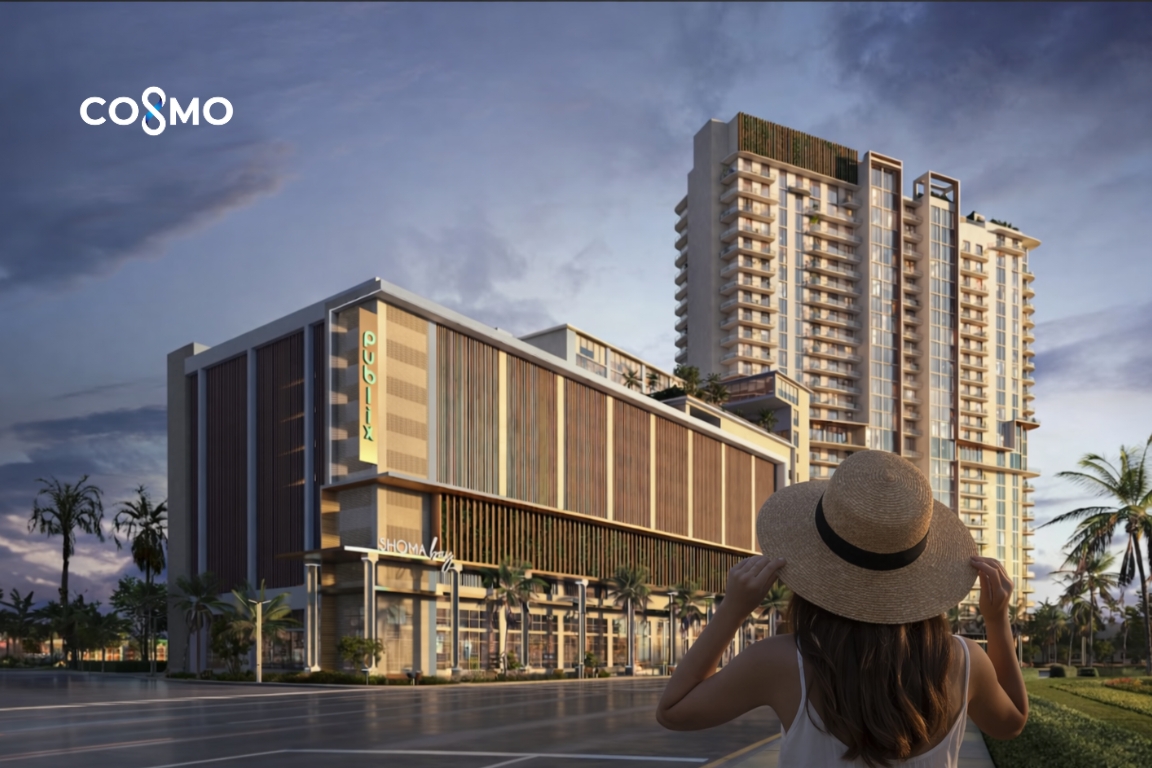
Luxury Apartments in Abu Dhabi: From Private Units to Living Communities
The concept of luxury apartments in Abu Dhabi has matured over the past decade. While quality and refinement remain important, increasing emphasis is placed on how residential environments function socially.
Contemporary luxury developments often focus on:
- Thoughtfully designed shared areas
- Internal walkability and connectivity
- Proximity to everyday services
- Sensitivity to cultural expectations around privacy and family life
Luxury, in this context, is defined less by exclusivity and more by how well a development supports daily living and social ease.
The Role of Shared Spaces in Creating Belonging
Shared spaces play a central role in social architecture, but their effectiveness depends on design quality rather than quantity.
Successful shared spaces tend to:
- Feel approachable rather than ceremonial
- Be visually accessible without being intrusive
- Support multiple uses over time
- Encourage brief, unforced interaction
Entry zones, semi-open lounges, landscaped outdoor areas, and transitional spaces between private and public realms often serve as the social fabric of a residential community.
Emotional Safety as the Basis of Community
Belonging cannot exist without emotional safety. Architecture contributes to this through clarity and predictability.
Design elements that support emotional comfort include:
- Clear wayfinding
- Balanced lighting
- Logical circulation
- Gradual spatial transitions
When residents feel confident navigating their environment, they are more likely to engage socially and feel at ease within the community.
Why Social Architecture Adds Long-Term Value
Residential communities designed around belonging tend to show:
- Longer resident retention
- Stronger emotional attachment
- Higher perceived quality over time
- Positive reputation through lived experience
This is why socially intelligent architecture is increasingly recognised as a long-term value driver across global residential markets.
The Future of Belonging-Led Residential Design
As cities continue to grow, the role of architecture in shaping social experience will become increasingly important. Developments such as Brabus Island in Abu Dhabi, alongside global references like Shoma Bay, reflect a broader movement toward residential environments that support connection, clarity, and emotional comfort.
In this future, architecture is not only about creating homes – it is about creating places where people feel they belong.
Belonging is no longer an abstract idea.
It is something that can be designed – carefully, responsibly, and with intention.
Stay updated with Cosmo Developments, your trusted partner in shaping the future of luxury residences in the UAE. Visit website to explore our latest projects, follow us on Instagram and Facebook , for community highlights and design previews, and connect with us on LinkedIn for corporate updates